Probably the most critical Passive House benefits is the ability of the living space to maintain a comfortable temperature when the neighbourhood loses power A thermal resilience study of temperature retention was performed in Central European during the 2022-23 winter by Dr. Jurgen Schnieders. This simulation study used three structures constructed to different building standards. The results of the study showed how well each structure retained it’s indoor heat during a power outage. The three building standards are:
- Passive House
- German building code (EnEV)
- mid-20th century
The Simulation of Passive House Benefits
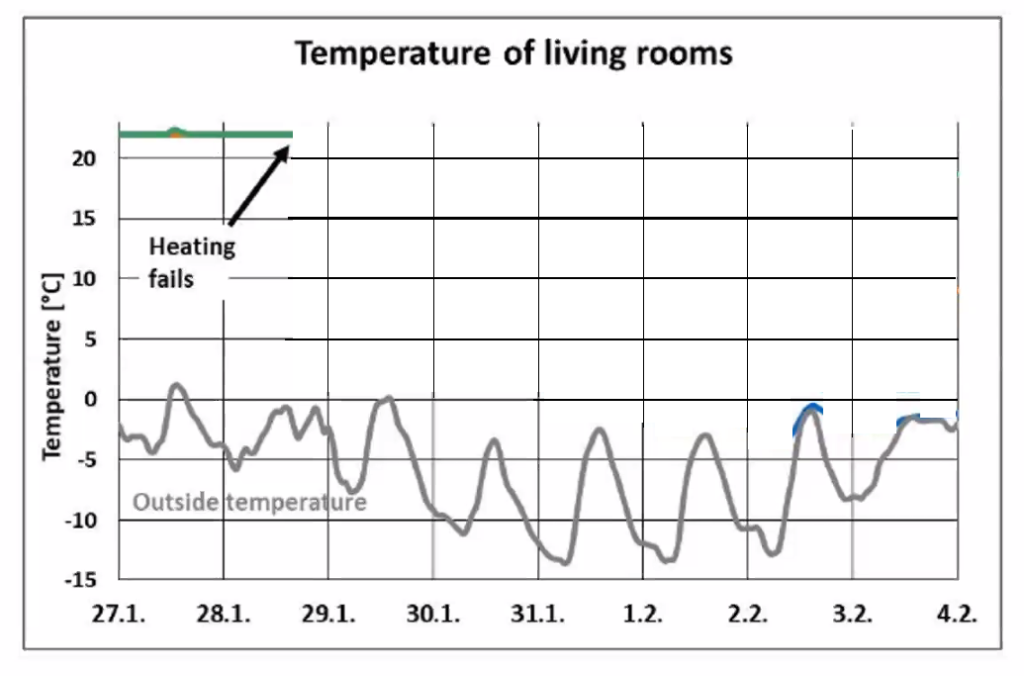
Each structure had a thermal envelope representative of it’s own standard. The ambient air outside of the structures was recorded an shown in the first image. The ambient outside temperature varied from slightly above -15C to just above 0C. The internal temperature of each structure as kept at approximately 22C. The simulation started on 27 January 2023. It ended 8 days later on 04 February 2023. The indoor temperatures of the three structures stabilized for 1 1/2 days.
Conventional Building
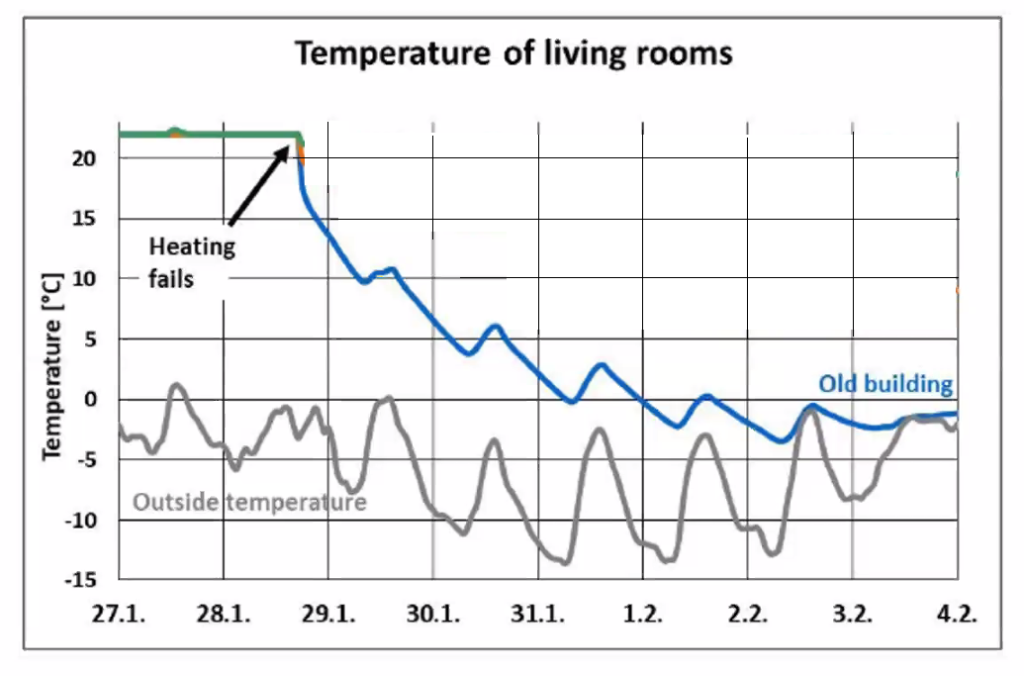
The “heat failed” in the early evening on the 28th. The interior temperature of the mid-20th century structure dropped below 10C by the next morning. The blue line for “Old Building” shows the daily temperature fluctuations with morning rises. Each nighttime drop in temperature brought the daily cycle lower until the indoor temperature matched the outdoor temperature after five days. We can see that the outdoor nighttime temperature of Feb 3rd was about 5 degrees warmer than the previous three nights and so the indoor nighttime did not drop as much.
Energy Efficient Building
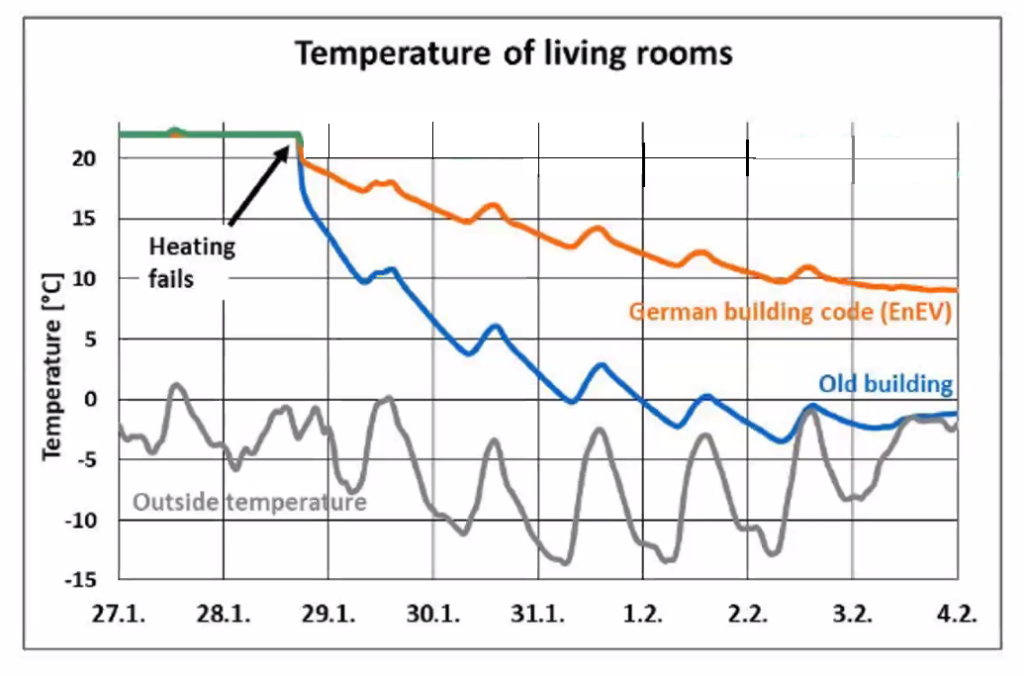
The structure built to the German EnEV standard faired much better. We can see smaller daily temperature fluctuations. By the 6th day, the indoor temperature has dropped about 13C to leave any fictitious inhabitant shivering in 9C. But still, a solid 12-13C warmer than the conventionally built structure.
Passive House Performance
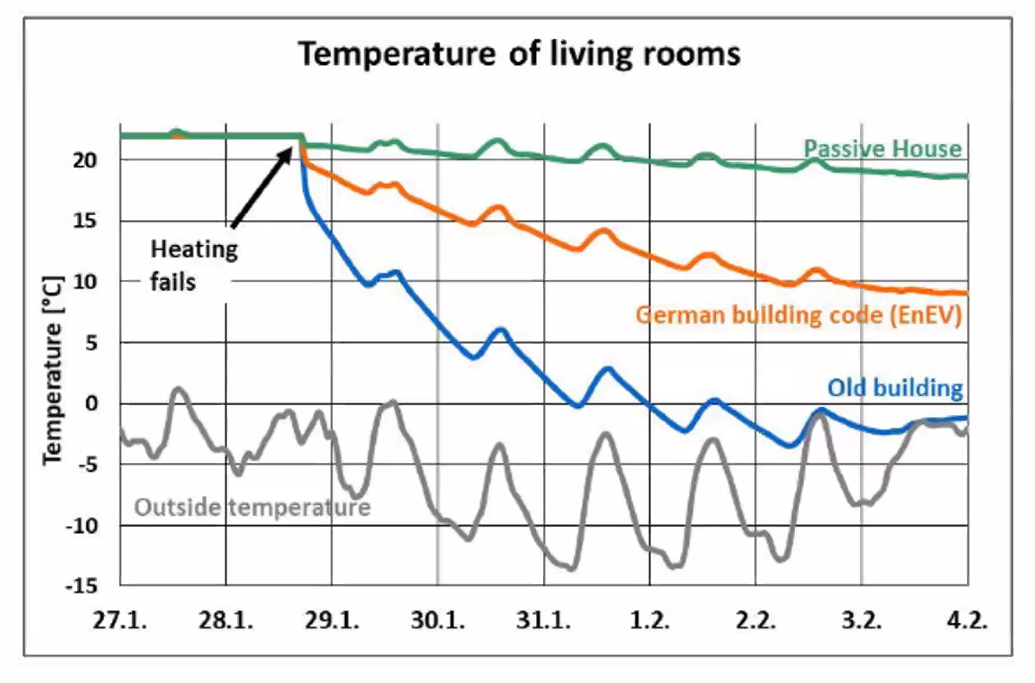
The structure built to the Passive House standard had an indoor temperature of 18C after six days of no heat in ambient outdoor nighttime temperatures that reached below -10C for four nights in a row. The indoor temperature didn’t get below 20C until three full days had passed. With only four degree indoor temperature drop after nearly a week, the Passive House standard faired best.